
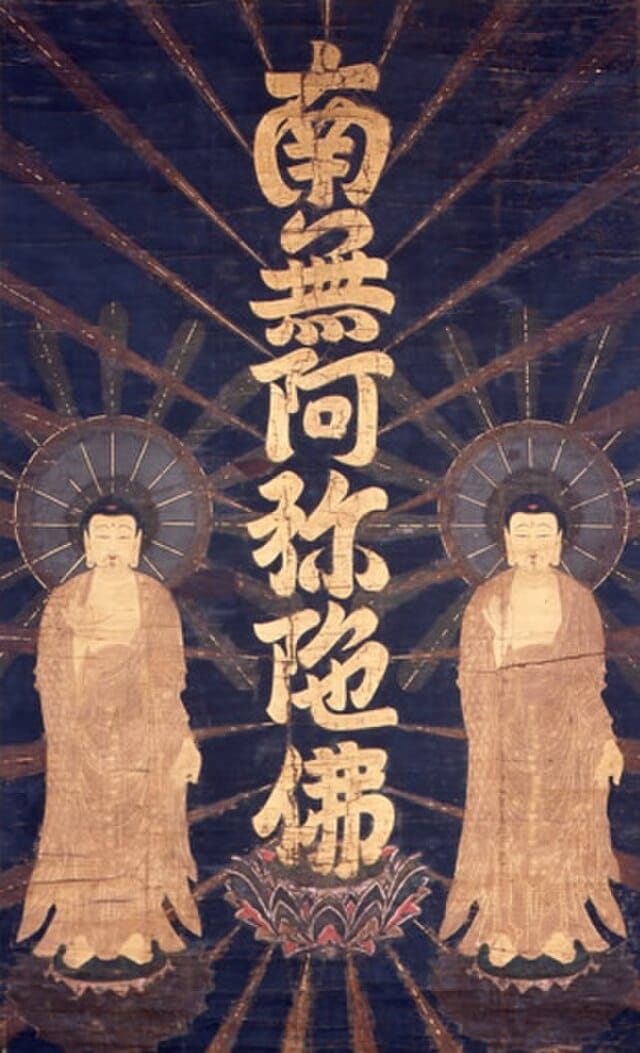
Saved by the Name? The Nembutsu and Its Critics in Japanese Buddhism

This article examines the nembutsu as the core practice of Pure Land Buddhism, highlighting Shinran’s vision of salvation through Amitabha’s vow and Nichiren’s sharp critique linking nembutsu to Avici hell, and explores the doctrinal, metaphysical, and textual tensions between them.
“Just say the nembutsu and be saved by Amida. Nothing else is involved,” once said a great Buddhist monk Shinran (1173-1262).[1] The nembutsu, this powerful mantra-like practice, has for centuries symbolized the Pure Land Buddhism teaching in China and Japan. In a sense, the whole history of the Pure Land Buddhism might be viewed as the story of nembutsu.[2] In one aspect, the practice of the nembutsu – which is also sometimes known in Chinese as nianfo – is the consummation of the history of the tradition of mantra (sacred chants) in the latter’s essential sense. Like with mantra, one reciting the nembutsu is assumed to be able to swiftly enter the state of samadhi (concentration of mind) and accesses prajna (transcendental wisdom).[3] It is all the more striking, however, to see Nichiren (1222-1282) – a contemporary of Shinran and a prominent critic of Pure Land teachings – argue that a single repetition of the nembutsu suffices, in his view, to place one to the Avici hell. While this article will mainly conduct a concise critical overview of the nembutsu practice and the latter’s concomitant metaphysical and textual underpinnings, it will also attend to the thought-provoking tension between the stances of Shinran and Nichiren toward the nembutsu.
Nembutsu, a Japanese phrase, can be translated as “Amitabha buddha’s name.” Nen, which is an abbreviation of the nembutsu used in the relevant sutras, has a broad technical denotation: it might simultaneously mean one’s contemplative practice (visualizing the Amitabha buddha in the mind’s eye), meditative one (thinking about the Amitabha buddha), as well as invocational one (pronouncing the Amitabha Buddha’s name).[4] The nembutsu connotes, “I entrust myself to Amitabha buddha.” This connotation is expressed differently in different languages. Some, however, state that the meaning of the phrase is not intended for philosophical analysis at all. They insist that the core meaning of the phrase is to be penetrated by a mind engaged in one-pointed meditation rather than by one’s deployment of a discursive thinking.[5] Others, however, believe that the phrase does contain a profound philosophical import: the combination of Namo (“I entrust myself” or “I worship”) and Amida might stand for a dynamic unity between the worshipping subject and the object worshiped: without Namo there can be no Amida, and without Amida there can be no meaning to one’s exercising Namo.[6] Further, insofar as Indian philosophy teaches that the Transcendent can be spoken of only apophatically, what is meant by Amida might be the formless Transcendent that lurks behind all things, something “immeasurable” or “infinite,” which nonetheless becomes objectified and, thereby, delimited upon being expressed by a concrete name.[7]
Even if the origins of the nembutsu are not entirely clear, it was greatly deliberated and promulgated in the works of the Mahayana Buddhism’s sages.[8] Among the latter there were Nagarjuna (2nd c. A.D.) and Vasubandhu (4th c. A.D.) in India, and Honen (1133-1212), Shinran, and Nichiren (1222-1282) in Japan – to mention just a few. Among them, it was primarily Shinran who established the idea that one’s basic aspiration, i.e. bodhicitta, is attainable not so much by one’s self-effort as by one’s consciously allowing the bodhicitta to arise within one as a manifestation of the transcendent.[9] Studying the legacy of the preceding teachers of the Pure Land doctrine, both Shinran and his teacher Honen espoused the wide-spread belief that, spiritually speaking, the consciousness of their contemporaries had significantly retrogressed. That is to say, they argued that their contemporaries lived in the final dharma age (mappo) and could no longer accomplish moksha merely by the observance of the Buddhist moral code, practicing samadhi and attaining vidya.[10] What they had to do instead, they believed, was to totally rely on the sublime “Other-Power” (tariki) of Amitabha buddha’s Original Vow.[11] As long as the world-cycle has entered a stage wherein the hold of spirituality on the minds of people has weakened in the face of the ever-increasing distraction of maya, one’s accessing tariki through the nembutsu was deemed an easily accessible method (upaya) of one’s spiritual rehabilitation in a difficult epoch.[12]
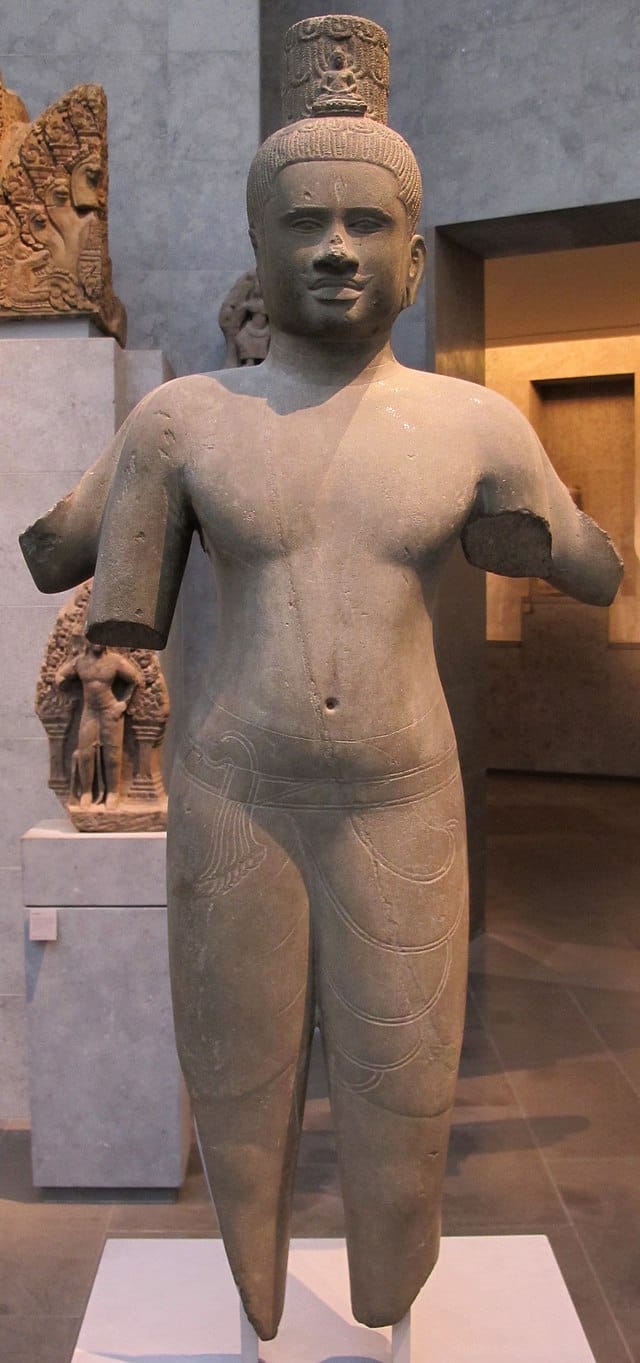
It is this Original Vow that underlies the whole idea of the nembutsu. The Original Vow is deemed as a supreme manifestation of Amitabha buddha’s loving kindness toward conscious beings as related by the Sutra of Eternal Life. According to the latter, eons of time (kalpas) ago, the monk Dharmakara attained bodhichitta in the presence of the Buddha Lokeshvara. Upon this attainment, he took fifty one vows.[13] Dharmakara – who, from then onward, came to be called “Amitabha” (or Amida) – made his 18th vow such that it became his duty to conduct all conscious beings to the rebirth in his blissful Buddha field, i.e. his sukhavati (the latter is also sometimes called the “Western Paradise”). His sole condition was that these beings take faith in him and call on his name.[14] Indeed, in this utterly important 18th Vow of his, Dharmakara says that only ten nens, i.e. instants of the nembutsu, suffice to cater for one’s rebirth in his sukhavati:
If I should become a Buddha and sentient beings of the ten quarters who have sincere faith and desire to be born in my country [producing] even ten nens are not born there, excepting those who have committed the five irreversible evils [i.e. things like killing one’s parents, killing a saint, injuring the body of a buddha, or causing division in the Buddhist community], then I will not accept perfect enlightenment.[15]
Shinran goes on to say that, upon Amitabha’s taking this Vow, innumerable buddhas – as is stated in the 17th vow of Dharmakara’s – started to pronounce the name of Amitabha in praise, i.e. to practice the nembutsu.[16] The name of Amitabha, when mentioned this way, is believed to align one who pronounces it with Amitabha’s wholesome energy, dispel all forms of avidya, and help realize any wishes a conscious being might entertain. Honen, too, argued for the special place of the nembutsu. For him, Amitabha himself drew attention to the nembutsu as the sole effective practice in his Original Vow and showed that, given the dire conditions of the mappo epoch, all teachings of the preceding sages and their arduous practices would be spiritually inaccessible, and thus karmically barren, for most people.[17]
How many times is one supposed to recite the nembutsu to gain the maximum benefit? In in twelfth-century century’s Japan, Honen’s nembutsu doctrine was so effectively preaching the importance of the nembutsu – and sometimes even at the expense of the importance of the sutras – that Honen’s followers are said to have competed with one another regarding the number of times they reiterate the nembutsu.[18] It was Shinran who stated that the nembutsu’s value is not quantitative: the imperative is rather to interiorize its meaning.[19] One, for instance, can repeat the word “flower” only once or one hundred times, but this repetition itself or lack thereof will hardly affect the way one understands the flower-ness, i.e. the essential meaning, of the flower. For Shinran, every nembutsu, regardless of number, contains the presence of the transcendent in the latter’s entirety. In theory, even a single mention of it might carry one to Amitabha’s sukhavati.[20] Furthermore, Shinran showed that the nembutsu was nobler than one’s simply seeking otherworldly benefits (jirki) and that the recited nembutsu was nothing short of the buddha’s manifestation, and his calling upon humans, right within samsara. The nembutsu, at the same time, was humans’ dynamic response to this call. As Dharmakara’s Original Vow cannot be untruthful, its being re-enacted by someone else cannot be untruthful. It must be latching onto what is real and essential. Therefore, for Shinran, if one recites the nembutsu, one is to be delivered.[21] Revolutionarily enough, Shinran contended that the whole idea of one’s rebirth in the Pure Land (ojo) posterior to one’s death can transition into that of one’s re-birth during one’s lifetime – i.e. within the very act of one’s reciting the nembutsu. The whole idea of one’s future life thus transforms into one’s existential realization of the “infinite depth of one’s consciousness” right now and here.[22]
If the ideal of the bodhisattva is seminal to the Mahayana Buddhism, the story of the Original Vow is seminal to the story of the bodhisattva. Whatever preceded the vow is thus viewed only as a preamble to one’s real entry to the Mahayana pathway; it is the Vow itself that is the formal expression of one’s being truly initiated. Indeed, the whole teaching of the Pure Land emanates from this Vow by the Boddhisatva Dharmakara.[23] The Buddha himself is involved in the effect that this Vow produces – his name is communicated under the cover of the nembutsu, which alone must suffice to allow one, if one has truly entrusted oneself to this upaya, to safely navigate across the “troubled waters” of samsara.[24] The nembutsu is an act of remembrance in which one’s attention to Amitabha’s powerful image naturally invokes the idea of the Vow and brings about the feelings of thankfulness toward it.[25] Just as Dharmakara’s identity was radically transformed into that of Amitabha upon Dharmakara’s invoking Amitabha’s name, it is believed that, in the same way, the Buddhist’s calling on this blessed name through the nembutsu brings forth innumerable favors and benedictions. Spiritual obstacles get removed, and the company of a transcendent being becomes achieved as a gift from on high.
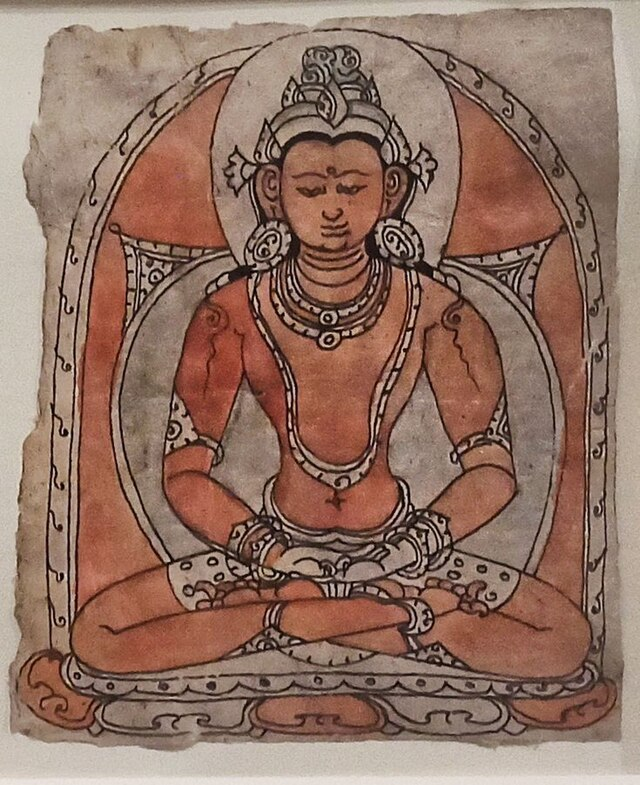
Buddhahood is all about awareness or knowledge, and Bodhisattvahood is all about the dynamic dimension of this awareness. The main character of this dynamism is compassion; the Original Vow demonstrates how this compassion might play out here on Earth, serving as an Earthly appearance of Amitabha’s Western Paradise.[26] That is to say, if the supreme wisdom of a heavenly buddha is not realizable here on Earth, if one is to forever remain barred – due to one’s inevitable karmic preoccupations – from the contemplated secret focal point within one’s being in which samsara appears self-same with Nirvana, it is only thanks to the Original Vow and one’s constant remembrance thereof by means of the nembutsu that one might retain one’s connection with the spiritual field of the buddha Amitabha’s merit, i.e. his punya-ksetra.[27]
But does not this sort of meditation provide only a temporary relief from the brunt of every-day dukkha? Does not the sheer amount of operations within the world of maya that one is to engage on a daily basis, render the idea of remembrance redundant? The Buddhist answer might be that as long as one lives one’s life in accordance with the Noble Eightfold Path and accordingly orders one’s livelihood, the efforts that one makes in the latter’s way will not, technically speaking, constitute a distraction. This way, one’s remembrance of Amitabha’s name will go on functioning as a powerful psychic undertow beneath one’s mundane preoccupations, ready to re-surface with a renewed vigor whenever one accomplishes one’s karmic chores and returns to one’s nembutsu practices.[28]
The main idea behind the nembutsu practice, therefore, is that sentient beings cannot contribute to their own moksha in any significant measure, for they are defiled and egoistic, and that only Amitabha buddha’s punya-ksetra can help them draw closer to Nirvana by allowing them to be reborn in his sukhavati. As such, the nembutsu is not only about one’s proclaiming the exalted status of Amitabha, it is also an act of one’s admittance of, and repentance from, the degraded nature of one’s character traits.[29] The invocation of the nembutsu diverts one’s attention from one’s empty self-glorification to the salvific powers of Amitabha, thus allowing one to avoid any self-aggrandizement. One, of course, can gear this salutary sentiment into rather negative a rhetoric and say that Amitabha’s tariki makes any personal duties superfluous. That is to say, one might point out that that Dharmakara, having taken his Vow, already accomplished all the salvific work. This attitude of overemphasizing the nembutsu’s “easy” karmic effectiveness is in no wise intended to detract one from the normal Buddhist teachings which necessitate that one make most serious mental and physical efforts for the sake of one’s salvation. Rather, what it aims at is to attach one’s attention to an important spiritual technique that will not only furnish one with a nexus to transcendent realities but also ascertain that one remain as empty of pride as one can in this egocentric mappo epoch of ours.[30]
But what was that which Nichiren so disliked about the nembutsu? Nichiren believed that the nembutsu belonged to rather secondary parts of the Mahayana tradition and thereby failed to represent the Buddha’s final intent – the one that was expressed in the Buddha’s reference to the Lotus Sutra as the “Unsurpassed Way.”[31] For Nichiren, the nembutsu was rather like a provisional “scaffolding” to a large “stupa,” the latter being the celebrated Lotus Sutra. Indeed, he thought, there might exist some use to a scaffolding, but eventually it is to be disassembled. For him, one was rather to rejoice in the profoundest message of the Lotus Sutra, placing one’s faith rather in it than in the endless recitations of Amitabha’s name. For Nichiren, the maximum that the nembutsu practice could accomplish was to cultivate one’s predisposition for getting enlightened – but this is in the rarest occasion of one’s having already perceived the “seed of buddhahood,” i.e. having established a connection to the Lotus Sutra in one of the previous lifetimes. Nichiren hardly expected anyone to be capable of such a feat in the troubled age of mappo.[32] Interestingly enough, when Nichiren deliberates on the sublimity of the Lotus Sutra, he deploys basically the same rhetoric that Shinran deployed for the nembutsu: even if one cannot comprehend the Sutra’s meaning completely due to one’s karmic limitations, one’s firm faith therein suffices to have one saved.[33] Further, unlike Honen and much like Shinran, Nichiren believed that one’s moksha is somehow attainable even in one’s lifetime and that one need not wait for death to attain it. Indeed, for Nichiren, it was the Buddha of the Lotus Sutra that abided right within this world of ours as a point of intersection of Nirvana and samsara in one’s interiority or, to put it differently, as a nexus between the heavenly buddhahood and the latter’s earthly “seed.” Strikingly resembling Shinran’s teaching, Nichiren wrote, “Wherever the practitioner of the Lotus Sutra dwells should be considered the Pure Land.”[34]
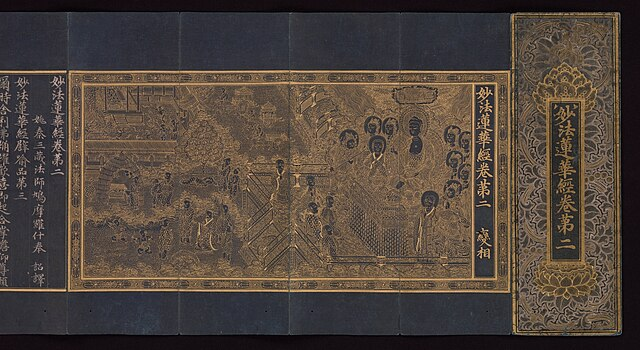
What was really concerning Nichiren, however, was Honen’s followers’ reluctance to focus on the Lotus Sutra in any meaningful way. This reluctance itself hardly seems to be caused by Honen’s followers’ wishful thinking. Rather, they assumed that the Lotus Sutra’s profundity lay firmly beyond the capacities of persons born in the mappo epoch. Nichiren, nevertheless, took it very personally: for him, this reluctance pointed to a sinister rejection on their part of what is unconditional in favor of what is conditional.[35] Indeed, Nichiren quite uniquely interpreted those passages of the Lotus Sutra that severely forewarn about the horrible punishment in the Avici Hell awaiting those who malign the Lotus Sutra and reject to have faith therein – i.e. commit the grievous sin of the so-called “Dharma slander” – to apply to any rejection of any non-provisional teaching in favor of what is a merely provisional teaching.[36] It therefore can be said that it was Nichiren’s disconcerting and yet intrinsically cogent identification of one’s enthusiastic practice of the nembutsu with one’s outright disparagement of a paramount sacred text that made the nembutsu practice appear as demonic as to lead one’s way to the Avici hell.
All in all, it is obvious that Nichiren’s attempt at assigning the reciters of the nembutsu to hell was an exaggeration and some sort of rhetorical extravagancy on his part. Rather, his true aim seems to be to drive his followers into another direction, namely that of exclusively honoring the Lotus Sutra, the teachings of which Nichiren saw as the only viable salvific upaya in the moppo epoch. It is bizarre to see Nichiren’s teachings fall remarkably afoul of the invariably reconciliatory attitude so peculiar to the traditional Confucian culture of Japan. Indeed, to assert that different forms of practice are appropriate for persons of different capacities was quite usual a stance for the Japanese Buddhists of the age. This spirit of antagonism might be something peculiar to Nichiren’s notorious character traits – in the end of the day, this “militant saint” of the Japanese Buddhism proclaimed himself to be nothing less than a bodhisattva Jogyo. Being constantly exposed to persecutions, Nichiren saw Jogyo to be predestined – despite his exceptional spiritual rank – to continuously suffer for proclaiming the grand truth in the age of avidya.[37] Shinran, in contrast, has integrated the best of what the then-current spiritual practices of the nembutsu could offer. Like Honen before him, he reiterated that, in the moppo epoch, one is forever unable to cater for one’s moksha through one’s own personal self-efforts. The infinite and inconceivable (acintya) cannot be reached through something finite and delimited – whether the latter be one’s limiting concepts or individual efforts. Shinran deemed those who thought otherwise to be in a state of delusion and to follow what he called the “Illusory Buddha,” i.e. the Buddha seen through the distorting perception of man’s finite intellect. He deemed the land of such a buddha to be illusory as well.[38] It did not mean, however, that acintya was something too mysterious to be grasped or that one could not attain it during one’s lifetime. Rather, to the enlightened mind, actintya resembles the water that surrounds a fish – the latter can feel it everywhere while seeing it nowhere. This reality, in turn, nicely taps in the landmark insight of the Mahayana Buddhism as to the essential “emptiness” of all truths: one is to attain the unconditional precisely by renouncing any claims of one’s ability to do so via one’s conditioned selfhood. Indeed, it is at the stillness of this vantage point of tariki that the unlimited and ineffable, Amitabha buddha, comes to be circumscribed in one’s humble utterance, Namo Amida Butsu.
Bibliography
“Amitabha.” Rigpa Shedra. Accessed December 17, 2020.
https://www.rigpawiki.org/index.php?title=Amitabha.
Andrews, A. “Nembutsu in the Chinese Pure Land Tradition.” The Eastern Buddhist 3, no. 2 (1970): 20–45.
Bando, Sh. “The Significance of Nembutsu.” Contemporary Religions in Japan 7, no. 3 (1966): 193–208.
Clair, Richard St. “The Meaning of Namu Amida Butsu.” True Shin Buddhism. Accessed December 14, 2020.
http://web.mit.edu/stclair/www/Meaning%20of%20Namu%20Amida%20Butsu.html.
“Nichiren: Japanese Buddhist Monk.” Encyclopedia Britannica. Accessed December 17, 2020.
https://www.britannica.com/biography/Nichiren.
“Nembutsu: A Simple Home Practice.” Amida Mandala Buddhist Temple. Accessed December 17, 2020.
http://www.amidamandala.com/nembutsu.
Pallis, Marco. “Nembutsu as Remembrance.” The Eastern Buddhist 10, no. 2 (1977): 30–48.
Stone, Jacqueline. “Nembutsu Leads to the Avici Hell: Nichiren’s Critique of the Pure Land Teachings.” In The Seventh International Conference on the Lotus Sutra, edited by the Rissho University Executive Committee for the Seventh International Conference on the Lotus Sutra, 115–130. 2013.
[1] Richard St. Clair, “The Meaning of Namu Amida Butsu,” True Shin Buddhism, http://web.mit.edu/stclair/www/Meaning%20of%20Namu%20Amida%20Butsu.html#:~:text=When%20we%20say%20that%20we,has%20already%20assured%20our%20salvation.&text=Or%20as%20Master%20Shinran%20said,Nothing%20else%20is%20involved.%22 (accessed 14 December, 2020).
[2] Shojun Bando, “The Significance of Nembutsu,” Contemporary Religions in Japan 7, no. 3 (1966): 195.
[3] Bando, “The Significance,” 196.
[4] Allan A. Andrews, “Nembutsu in the Chinese Pure Land Tradition,” The Eastern Buddhist 3, no. 2 (1970): 24, 26.
[5] Pallis, “Nembutsu,” 37.
[6] Bando, “The Significance,” 204.
[7] Bando, “The Significance,” 204.
[8] Andrews, “Nembutsu,” 22.
[9] Bando, “The Significance,” 194.
[10] Jaqueline Stone, “Nebutsu Leads to the Avici Hell: Nichiren’s Critique of the Pure Land Teachings,” in The seventh International Conference on the Lotus Sutra, ed. The Rissho University, Executive Committee for the Seventh International Conference on the Lotus Sutra, (2013): 115.
[11] Stone, “Nebutsu Leads to the Avici Hell,” 115.
[12] Pallis, “Nembutsu,” 34.
[13] “Amitabha,” Rigpa Shedra, https://www.rigpawiki.org/index.php?title=Amitabha (accessed Dec 17, 2020).
[14] “Amitabha,” Rigpa Shedra.
[15] Andrews, “Nembutsu,” 25.
[16] Bando, “The Significance,” 197.
[17] Stone, “Nebutsu Leads to the Avici Hell,” 119.
[18] Stone, “Nebutsu Leads to the Avici Hell,” 115, 117.
[19] Pallis, “Nembutsu,” 40.
[20] Pallis, “Nembutsu,” 41.
[21] Bando, “The Significance,” 200.
[22] Bando, “The Significance,” 200.
[23] Pallis, “Nembutsu,” 32-3.
[24] Pallis, “Nembutsu,” 33.
[25]Pallis, “Nembutsu,” 34.
[26] Pallis, “Nembutsu,” 36.
[27] Pallis, “Nembutsu,” 45.
[28] Pallis, “Nembutsu,” 42.
[29] Pallis, “Nembutsu,” 34.
[30] Pallis, “Nembutsu,” 48.
[31] Stone, “Nebutsu Leads to the Avici Hell,” 119.
[32]Stone, “Nebutsu Leads to the Avici Hell,” 123.
[33] Stone, “Nebutsu Leads to the Avici Hell,” 120.
[34] Stone, “Nebutsu Leads to the Avici Hell,” 121.
[35] Stone, “Nebutsu Leads to the Avici Hell,” 124.
[36] Stone, “Nebutsu Leads to the Avici Hell,” 125.
[37] “Nichiren: Japanese Buddhist Monk,” Encyclopedia Britannica, https://www.britannica.com/biography/Nichiren (accessed December 17, 2020).
[38] Bando, “The Significance,” 207.
