
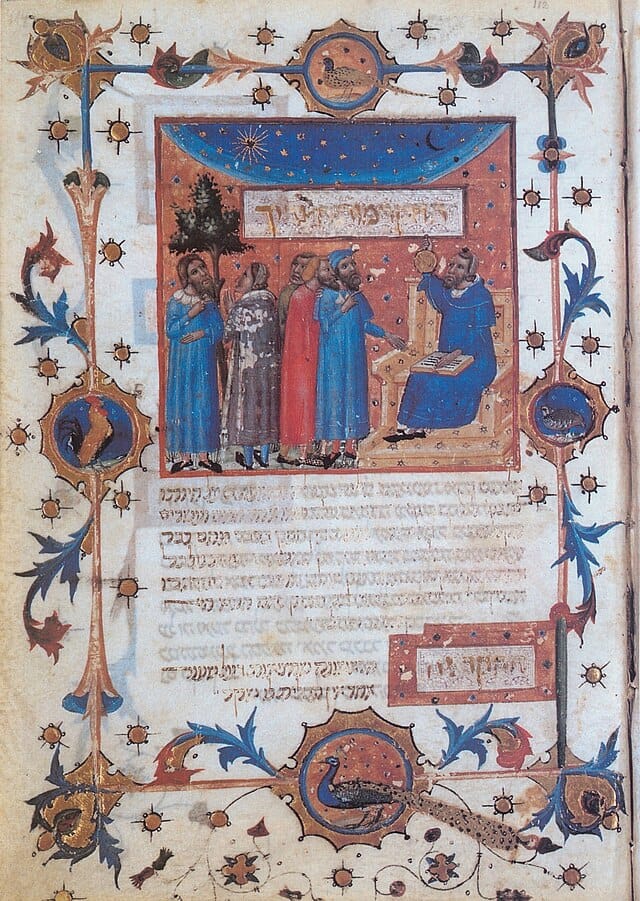

Rabbi Nathaniel Fayyumi (d. 1165) presents Islam as a genuine divine revelation, affirming the Qur’an, prophetic plurality, and religious diversity willed by God. While maintaining Jewish covenantal chosenness and Torah non-abrogation, his approach is pluralistic and non-prejudicial toward Muslims.
Of the Jewish thinkers who have accorded great respect to Islam, Rabbi Nathaniel b. Rabbi Fayyumi (1090–1165) is one of the most important. Rabbi Nathaniel was the leader of Yemenite Jewry and one of its leading rabbinic lights. Rabbi Nathaniel’s main work is Bustān al-ʿUqūl, a Judeo-Arabic work of theology and ethics. Rabbi Nathaniel’s work was translated into Hebrew as Gan HaSekhalim (Garden of the Intellects). In the introduction to his translation, Rabbi Joseph Kapach writes that Rabbi Nathaniel’s book was very influential for Rabbi Moses Maimonides. Indications of this influence can be found in the latter’s Iggeret Teḥiyyat HaMetim (Epistle on the Resurrection of the Dead) and his Moreh HaNevukhim (Guide to the Perplexed). More explicitly, Maimonides himself refers to Rabbi Nathaniel with the honorific “our master and teacher” in his Iggeret Teiman, which was addressed to none other than Rabbi Nathaniel’s son Rabbi Jacob.
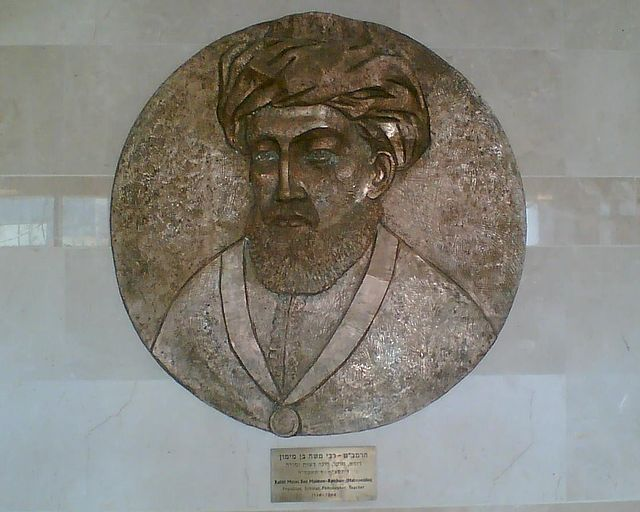
In the sixth chapter of Gan HaSekhalim, Rabbi Nathaniel presents a comprehensive approach to world religions. He not only argues that Judaism allows for other religions to exist, but he even asserts that they are those which originate in divine revelation. In the same way that the one true God sent prophets to the nations before the giving of the Torah to the Children of Israel, so it is possible – necessary, even – that He sent others after it, “so that the world would not remain without religion” [Source 1]. Without any equivocation, Rabbi Nathaniel declares that there are world religions that are an essential realization of God’s will, and of divine origin. Every nation, according to Rabbi Nathaniel, must follow the prophecy that it has received [Source 5].
Rabbi Nathaniel’s argument proceeds logically. The Torah attests that God sent prophets to the non-Jews, and He has the ability to do so again at any time. Since, for the good of humankind, God desires that all humanity has religion, it logically follows that God sends different nations prophecies attuned to their Volksgeist (the "spirit" or ethos of a people), “for He knows what is most beneficial for His creatures and what is fit for them” [Source 5]. Rabbi Nathaniel concludes that other religions are not only legitimate but represent the realizations of prophetic revelations tailored by God to suit their particular addressees: “It is incumbent, then, upon every nation to conduct itself according to what has come into its possession, and to emulate its prophets, priests, and leaders.” This generates an obligation for the Jewish people to tolerate and respect these religions: “Consequently, we ought to observe what is already in our possession, and on which we have been raised, and not contradict anyone of another faith.”
Chapter 6 of Gan HaSekhalim is filled with additional fascinating points. Naturally living in Yemen in the late eleventh and twelfth centuries, the main religion Rabbi Nathaniel had to come to terms with was Islam, so a significant portion of the chapter is dedicated to demonstrating from the Qur’ān itself that the Torah was not superseded and remains binding on the Jewish people. Islam belongs to those additional revelations to other peoples that bind them to their own religious systems [Source 3]. Many scholars of religion consider this to be the straightforward reading of the Qur’ān, and various Islamic scholars have tried to reinstate it. Rabbi Nathaniel’s construal of the Qur’ānic position is a remarkable precursor to Rabbi Jacob Emden’s interpretation of the New Testament, which he argues did not intend to supersede the Torah.
One source that supports Rabbi Nathaniel’s reading is the Qur’ānic chapter al-Mā’ida (“The Table Spread”), which affirms the veracity of pre-Islamic revelations:
Truly We sent down from on high the Torah, which provides guidance and a light by which the prophets who submitted [unto God] judged those who are Jews. The sages and rabbis also judged in accordance with God’s Book, which they were bidden to preserve…. […]
And We have sent down from on high unto you the Book to reveal the truth, and to confirm the Books that came before it and protect them faithfully. So judge between them in accordance with what God has sent down from on high, and do not follow their caprices away from the truth that has been revealed before you. For each among you We have given a law and a way. And had God wished, He would have made you one nation, but He wished to test you regarding all that He has given you. So strive to be first in good deeds, because you return all together to God, and then He will inform you of everything on which you disagree. Judge between them in accordance with what God has sent down from on high… (Q 5:44,48)
Since Rabbi Nathaniel considers Islam to be of divine revelatory origin, and the Qur’ān is a divinely revealed work. In a strange but interesting turn, the very principle that God deliberately revealed Himself to different peoples, which is the basis for their religions, comes from the Qur’ān! Although he describes it as a rational deduction – if God wants a world brimming with religion, he must have sent His messengers to the ends of the earth – the Qur’ān states it outright. Rabbi Nathaniel ends by asserting that if one traces the rainbow of religions, one finds that it originates and terminates in the all-encompassing unity of God:
[A]ll of them are from one God and unto Him they all return. All pray to Him and turn to Him, and every righteous soul is transferred to Him, as it says, “and the spirit returns unto God who gave it” (Eccl. 12:7). (Gan HaSekhalim, ch. 6, p. 115) [Source 5]
Here, too, one detects affinity to the Qur’ān, as this language seems to echo the quote above: “You return all together to God.” An additional expression of the respect that Fayyumi accords to the Islam and the Qur’ān is that in the second chapter of his book he finds mystical meaning in the Shahada (the Muslim declaration of faith) [Source 6].
Within this pluralistic scheme, Rabbi Nathaniel assigns the Jewish people a singular role:
God, therefore, chose us, gave us His Torah and commandments, and imposed upon us immense obligations that He did not impose upon any nation before or after us, to increase our reward (Gan HaSekhalim, ch. 6, p. 111) [2]
Rabbi Nathaniel’s unique view of the Qur’ān as containing true prophecy is reflected on this issue as well, because it establishes the special status of the Jewish people. As he puts it:
The Law of the Arabs (i.e. the Qur’ān) mentions how God favored us and raised us above all other mortals: “children of Israel, remember My favor that I have bestowed upon you, and that I have raised you above all other mortals.” (Gan HaSekhalim, ch. 6, p. 111) [2]
One final aspect of Rabbi Nathaniel’s thought bears on the relationship between Noahide law, Mosaic law, and the foundational revelations of non-Jewish religions. Neither the Torah nor the Qur’ān abrogate the seven Noahide mitzvot; they are additions and not revisions [source 4]. The pre-Abrahamic mitzvot are deeply-buried foundations on whose rock-solid foundation other religions are built. Like the layers of an archaeological tell, each new revelation builds upon earlier ones, and the new religious construction takes on the form appropriate to the epoch. In Rabbi Nathaniel’s account, the advent of Abraham did not negate the value of Noahide religion, nor did the giving of the Torah at Sinai render obsolete the commandments given to Abraham.
The theology of Rabbi Nathaniel gives monotheistic world religions in general and Islam in particular seats next to Judaism, because it considers them the product of revelation and the fulfillment of the divine will, to guide all of humanity to worship the one God.
Appendix: Translations from Gan HaSekhalim
[1] Gan HaSekhalim, Chapter 6, p. 110 – Prophets have been sent to the nations to bring religion to the world
Know, my brother, that nothing prevents God from sending to His world whomever He wishes whenever He wishes. Emanation is unceasingly drawn forth from the world of holiness, and the noble matter [proceeds] from the rarefied world to the gross world constantly, to rescue souls from the hylic sea [of material being] and the world of nature from obliteration and the flames of hell. Even before the giving of the Torah, He sent prophets to the nations, as our Sages said: “Seven prophets prophesied to the nations of the world before the giving of the Torah: Laban, Jethro, Balaam, Job, Eliphaz, Bildad, and Zophar.”
Similarly, after its giving, nothing prevented Him from sending them whomever He wished, so that the world would not remain without religion. The prophets declared that the other nations would serve Him from the rising of the Sun to its setting: “For from the rising of the sun to its setting My name is great among the nations.” (Mal. 1:11), and it says, “To Me shall every knee bow, every tongue swear” (Is. 45:23). He chose and exalted us among the nations, not because of our prior righteousness but because of His regard for our forefathers Abraham, Isaac, and Jacob, as it says, “Not because you are the most numerous of all the peoples did the Lord desire you and choose you, for you are the fewest of all the peoples. But because the Lord loved you and He kept the oath that He swore to your forefathers, etc.” (Deut. 7:7–8).
[2] Gan HaSekhalim, Chapter 6, p. 111 – The chosenness of the Jews according to the Qur’ān
God, therefore, chose us, gave us His Torah and commandments, and imposed upon us immense obligations that He did not impose upon any nation before or after us, in order to increase our reward. […]
The Law of the Arabs mentions how God favored us and raised us above all other mortals: “children of Israel, remember My favor that I have bestowed upon you, and that I have raised you above all other mortals.” (see Q 2:40, 47, and 122). When it says, “I have raised you,” it is an absolute statement, not a historical one. […]
Our Creator is just in imposing responsibilities upon us that He has not imposed upon others, being more exacting with us than with them, and punishing us while not punishing them. It is out of His love for us, in order to ennoble us. … Our Law and their Law both attest to it, so that they cannot deny it whatsoever, especially since it was already promised to our forefathers Abraham, Isaac, and Jacob, as it says, “In order to establish you for Him today as a people” (Deut. 29:12).
[3] Gan HaSekhalim, Chapter 6, pp. 111–112 – The Qur’ān indicates that it does not abrogate the Torah
[The Qur’ān also indicates] that the Torah was not abrogated, which they imagine because of the power they exercise over us, their subjugation of us, and the absence of our succor. Concerning that it is said, “And [I come] affirming that which was before me from the Torah…” (Q 3:50) And it also said, “How do they judge you, when they have the Torah, wherein are the Lord’s laws, and the Lord’s laws will never be forgotten?” (Q 5:43) And it also said, “You shall find no change in the word of God,” (Q 35:43) by which it means the Torah. How, then, can we change His law and His religion which Moses brought down? Our pious forefathers did not see fit to change God’s law and religion received from Moses, His messenger, and so we are following in their footsteps and adopting their upright practice when we cling fast to the Torah and fulfill its mitzvot and precepts, for its exchange or alteration is forbidden. And it also said, “The Lord desires to make [this] clear for you and to guide you in the laws of those who went before you.” (Q 4:26) That is proof that he [the context makes it clear that this refers to Muhammad] was a messenger to them but not to those who preceded them. And it also said, “You people of the Book, no act shall be received from you until you observe the Torah.” (Q 5:68) And it also said, “So if you are in doubt about what has been said to you, ask those to whom the Book was given before you.” (Q 10:94) This implies that He would not have commanded him to ask concerning the Book had He abrogated it. […]
Similarly, if disputants who are not of our faith insist that our Torah has been abrogated, we give them a silencing reply: “What do you say about what was received by the prophet Moses – is it foolishness or wisdom?” They must perforce answer not “foolishness” but “wisdom.” This answer suffices for them, for wisdom is never altered, changed, abrogated, or replaced by something else. God would never give a command through a prophet with signs, proofs, miracles, and supernatural manifestations in the heavens and on the earth, and then change His mind to abrogate and annul it. But it is possible for Him to give additional commands to whomever He wishes, and to send whom He wishes to whomever He wishes, since all the worlds are His possession and creation. Proof that He sent a prophet to every people in their own language is in the Qur’ān: “And We have sent no messenger except in the language of his people.” (Q 14:4) Consequently, had he been sent to us, it would have been in our language. And again, had he been for us, He would not have said to him, “You are among those sent to warn a people whose ancestors were not warned.” (Q 36:3) He intends the people who worshipped gods and idols.
[4] Gan HaSekhalim, Chapter 6, p. 112 – The Torah did not abrogate but added to the laws of Noah and Abraham
And if they say, “Our Book abrogates your Book, just as your Book abrogated the Book of Abraham,” we reply: “That is not true. On the contrary, we uphold the teaching of our forefather Abraham…” […] When God sent Moses with the Torah of the children of Israel… He added to the commandment of Abraham according to the need of the times. But He did not annul the commandment of Abraham. […] This is no abrogation. Likewise, He obligated the descendants of Noah in only seven laws. This was because they were few in number and because that era could not bear more. When Abraham appeared, God enjoined upon him the observance of additional commandments.
[5] Gan HaSekhalim, Chapter 6, pp. 113–115 – Every nation must serve God via what was given to it
Know that God ordered that every people should worship Him according to their law. He permitted to each people things that he prohibited to others, and He prohibited to them things that He permitted to others – for He knows what is most beneficial for His creatures and what is fit for them.
There is a fine analogy for God’s command to His creations and how He wishes it to be carried out. A king ordered his subjects to build a palace. Some of them were architects, some were carpenters, some decorators, some smiths. Of these, some zealously carried out the king’s orders, while others were lax, and still others deserted the king’s service. The king provided for all of them. News of their service reached the king, but he waited until he sent for them and called them to account for how they had carried out his orders. For what they had done, he recompensed double those practitioners of each craft who worked well. [And] for what they had done, he recompensed in kind those practitioners of each craft who worked poorly. At that point, repentance was of no avail to the penitent, since he had not set out to do good.
Similarly, the Creator has authorized the destruction of the world and the construction of the afterlife. He has sent prophets in every age and period that they might urge the creations about divine service and good deeds, and to guide them on the path of the upright. Both salvation and obliteration occur on account of matters that are clear. It is incumbent, then, upon every nation to conduct itself according to what has come into its possession, and to emulate its prophets, priests, and leaders. Not one [people] remains without a law, for all of them are from one God and unto Him they all return. All pray to Him and turn to Him, and every righteous soul is transferred to Him, as it says, “And the spirit returns unto God who gave it” (Eccl. 12:7).
[6] Gan HaSekhalim, Chapter 2, pp. 43–44 – The secret of the Shahāda (Islamic Profession of Faith)
[T]he seven planets and the twelve constellations are the foundation of the potencies, and every prophet and giver of Law alludes to them …
Even that of the Arabs came to them only according to the combination of [these numbers]. He bound them to mention four words, which incorporate the nature of the seven and the twelve within the Arabic orthography… Rather, the words possess significance within their characters and orthography, which allude to the science of the seven and the twelve, which underlie all creations and are the foundations of all existents.
When a person arrives at this realization and understands this, and so acknowledges God’s unity and transcendence, he becomes worthy of admission to Paradise, to attain eternal bliss. What is special about these words is the number of letters: לא אלה אלא אללה is twelve, and the number of syllables is seven, yielding nineteen. לא is one syllable, אלה is two syllables, אלא is two syllables, and אללה is two syllables – adding up to seven.
