
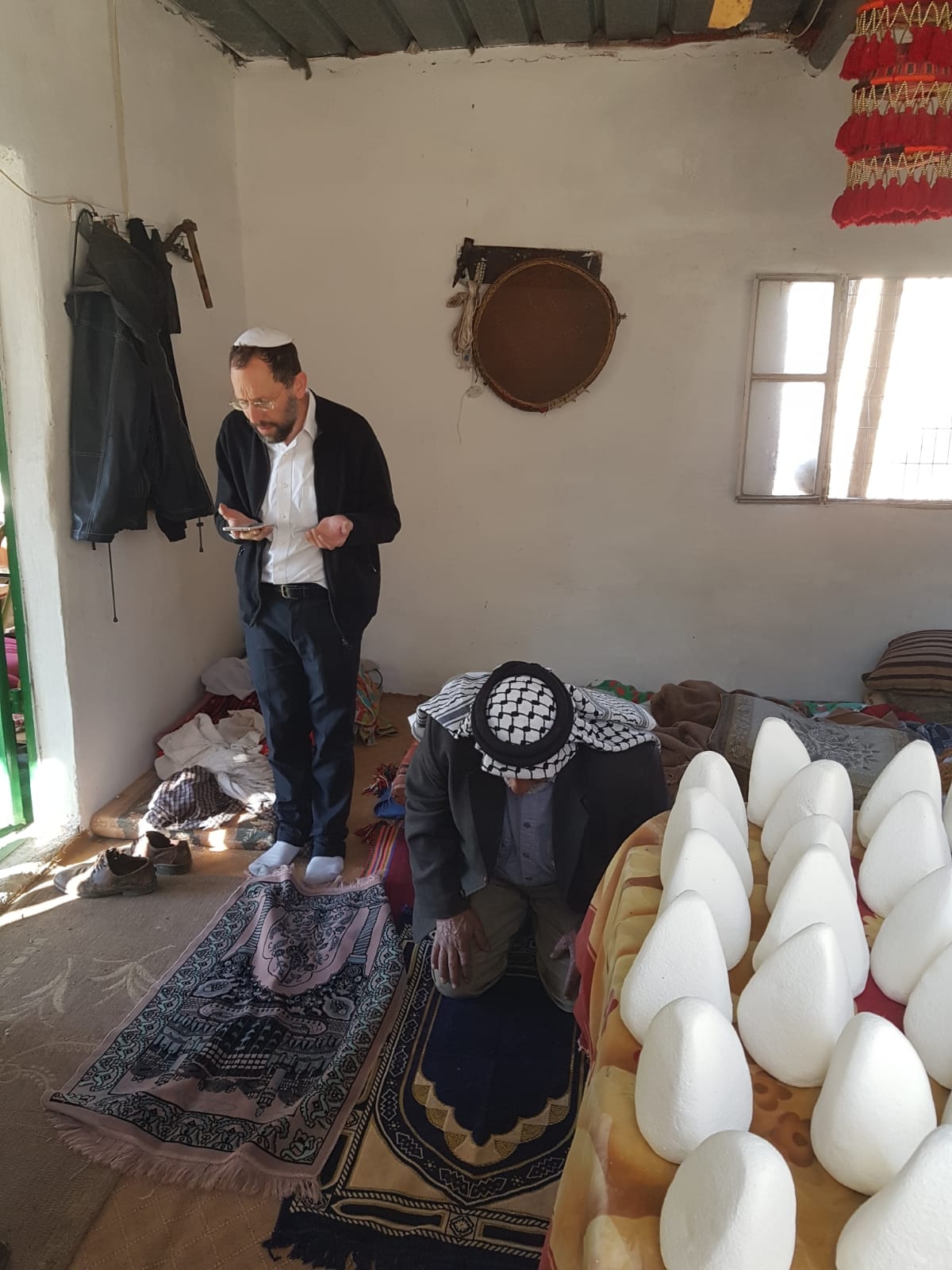

Rabbi Yakov Nagen calls for a Jewish theology that honors Islam as a fellow Abrahamic faith. Emphasizing shared belief in one God, prophetic heritage, and ethical values, he advocates mutual respect, interfaith partnership, and healing rooted in divine purpose.
I am a Rabbi who believes it is God’s will that the Abrahamic religions heal their relationships and become a source of blessing for all humanity. I see a great and noble story shared among our traditions—one in which each faith has a unique role to play in the unfolding of God’s plan for the world. Years of studying both my own tradition and those of others have revealed to me that this calling resonates deeply within our foundational texts. At the Ohr Torah Blickle Institute for Interfaith Dialogue, where I serve, we are guided by a dual commitment: unwavering fidelity to our sacred scriptures and a sincere aspiration that our efforts reflect the will of God. In the Qur'an, every Surah but one begins with the phrase Bismillah—“In the name of God.” In the Bible, Abraham journeys through the land calling upon the name of God, and the prophetic vision anticipates a future in which all of humanity serves God together, united in His name.
The uniqueness of every religion requires us to recognize the specific challenges and potential blessings within each interfaith relationship. For this reason, working with a generic interfaith model for all religions offers limited potential, whereas acknowledging the distinct dynamics of each individual relationship allows for a deeper, more transformative engagement. With this in mind, I have chosen to dedicate this article to the relationship between Judaism and Islam.
While the Qur'an speaks explicitly about the Jews, the foundational Jewish texts—the Bible and the Talmud—predate the emergence of Islam and therefore do not address it directly. Nevertheless, these and later Jewish writings provide the basis for developing a general theology of other religions. From this foundation, it is possible to articulate a specifically Jewish theology of Islam. The following section will apply these insights specifically to the case of Islam.
Humanity and its Religions
Religion is not only about God, but about people. It therefore follows that Jewish theology of other religions is intimately intertwined with Jewish understanding of the broad story of humanity, and of the role of the Jewish people therein.
The Bible does not begin with Judaism or the Jewish people, but with the dual foundation of a shared humanity and shared Divinity. All humans are created in the image of God, and all descend from a common ancestor. Both of these principles are echoed in the Talmud. Mishna Sanhedrin states, “Adam was created alone…for the sake of peace, so that one person will not say to another, ‘My father is greater than your father.’” [1] Mishna Avot emphasizes our shared Divinity when it declares, “Beloved is humanity who is created in the image (of God).” [2]
The Path of Abraham
When God singled out the biblical Patriarchs, His intention was not to abandon broader humanity. On the contrary, God chose them to serve as a source of blessing for the entire world – as the Bible says of Abraham, “In you, all the families of the earth shall be blessed.”[3] Likewise, God called upon Isaac and Jacob to serve as a channel for blessing for all nations.[4]
Explaining why Abraham was chosen for this mission, the Torah states: “Abraham shall surely become a great and mighty nation, and all the nations of the earth shall be blessed in him. For I have known him, in order that he may command his children and his household after him, that they keep the way of the Lord, to do righteousness and justice.” [5] These verses present a sequence: First we learn that Abraham will bring blessing to humanity; then that he was chosen because he would command his children, and all those under his sphere of influence, to “keep the way of the Lord, to do righteousness and justice.” The focus seems to be on people, rather than God. But if we look beneath the surface, we see the essential linkage between the human and the Divine: “To do righteousness and justice” takes place on the human plane, but nonetheless constitutes “the way of the Lord.” Just as the story of the creation of humanity places a dual emphasis on a shared origin and common divinity, here too we see both a vertical connection to God and a horizontal connection to one another. [6]
We see the continuity of this twofold approach in God’s first address to the People of Israel when they arrive at Mount Sinai to receive the Torah, during which He enjoins them to be “a kingdom of priests and a holy nation.” [7] The People of Israel are compared to priests, whose role is to serve a wider circle. [8] The great Italian biblical commentator Rabbi Ovadia Sforno (1475 - 1549) reads the charge to become a “kingdom of priests” as promoting the prophetic vision of all the nations serving God together. [9] It emerges that the consequence of chosenness is a sense of responsibility for the other. [10]
If we move to the period of the First Temple, which for the Jewish people represents the connection between heaven and earth, we again see the theme of universal responsibility. In his prayer at the dedication of the Temple, King Solomon calls to God to fulfill the prayers of all people coming to pray:
And to the foreigner who is not from Your people Israel and comes from a distant land for the sake of Your name… and comes pray at this house – You shall hearken from your heavenly abode, and do according to all that he shall ask of You, so that all the peoples of the earth may know Your name, to fear You as do Your people Israel. [11]
Moving to the prophet Isaiah, we see a realization of Abraham's mission. Isaiah describes a future in which “all the nations” come to Jerusalem in order learn the “path of God” of justice and peace. [12]
It is moving beyond words that it is Abraham’s name that characterizes the shared heritage of the religious faiths of the majority of humanity today. A Talmudic legend from the early third century fancifully expresses the expectation of global acknowledgement of Abraham: "Rav says: On that day when our forefather Abraham left the world, the leaders of the nations of the world stood in a line, and said, 'Woe to the world that has lost its leader, and woe to the ship that has lost its captain.'"[13]
Calling in the Name of God with One Shoulder
For me the guiding vision of this future partnership of humanity is that of the prophet Zephaniah: “For then I will turn to the peoples a pure language, that they may all call upon the name of the Lord, to serve Him with one shoulder.” [14] What began with only Abraham calling in the name of God [15] here becomes a shared call for all humanity. I have always understood the first part of the verse as a calling to promote interfaith activity. But the meaning of “with one shoulder” had long eluded me. However, one day, after a joint prayer of rabbis and imams, I received a warm hug from my dear friend, Imam Dr. Talib Shareef. As we embraced, face to face, heart to heart, it suddenly struck me that we were also meeting shoulder to shoulder, becoming one. I then understood the verse in Zephaniah in its entirety: the first part “all calling in the name of God” tells of the vertical axis connecting humanity to God. The second half of “serving Him with one shoulder” refers to the horizontal line connecting humanity to one another, teaching us that fraternity is a way to serve God.
In August 2022, I had a severe brain hemorrhage and hovered between life and death for several days. In that time, this biblical verse took on a personal note. My wife urgently turned to our Jewish brothers and sisters for prayer and, through my phone's WhatsApp contacts, also reached out to every imam, sheikh, qadi, bishop and priest, beseeching them to pray for me. The response was overwhelming, and with the mercy of God - and the skill of the doctors - I am still here. For me, it was a small yet significant fulfillment of the vision of jointly calling in the name of God. My gratitude for the prayers on my behalf from good people of many faiths strengthened my mission and moral obligation to help heal our broken world and bring humanity together in light and love.
God Shall Be One
“God shall Be One and his name One.” [16] As mentioned above, this is the concluding verse of each of the three daily Jewish prayers. It expresses the essence of the mantra of Jewish belief, the Shema, “Hear, O Israel: The Lord our God, the Lord is One.” [17]
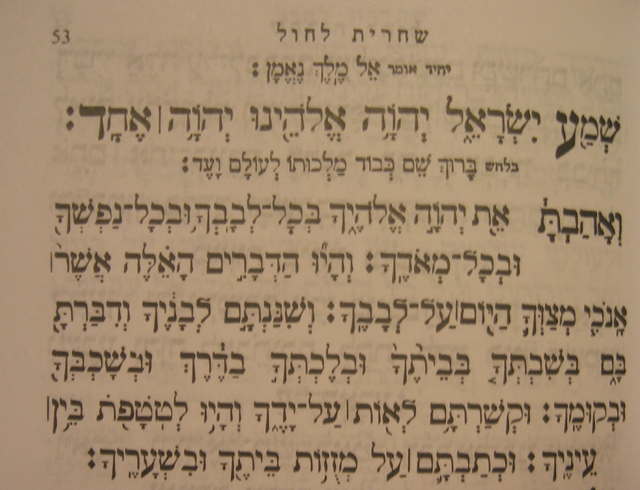
This message, of course, is central to all Abrahamic religions. In the Book of Mark, when asked “Of all the commandments, which is the most important?” Jesus answers with the first two verses of the Shema: “The most important one,” answered Jesus, “is this, ‘Hear, O Israel: The Lord our God, the Lord is One. Love the Lord your God with all your heart and with all your soul and with all your mind and with all your strength." [18] Likewise, the first of the five pillars of Islam is the Shahada, which begins with the affirmation of one God: “There is no God but God…”
The classical biblical commentator Rashi (Rabbi Shlomo Yitzchaki 1040-1105) learns from the above verses from Zechariah and Zephaniah that the fulfillment of the Shema is contingent on joint participation with all of humanity:
The Lord who is now our God and not the God of the other peoples of the world will in future time be the One (sole) God, as it is said: “For then I will turn to the peoples a pure language that they may all call upon the name of the Lord" (Zephaniah 3:9), and as it is further said: “In that day shall the Lord be One and His name One" (Zechariah 14:9). [19]
We now turn to a Jewish perspective on how to achieve this spiritual fellowship, the obstacles in the way, and how to overcome them.
A Jewish Approach to Monotheistic Religions
There is no essential principle in our faith that opposes other religions, and it is possible for them to be influenced by an abundance of knowledge and prophecy or the Holy Spirit or any other divine help according to their condition and value, by the good and pious among them ... the faiths that accept that unity of God have no need to leave their religions and they can always remain in them with broad thoughts, with complete piety. [20]
The number of adherents to Judaism is small compared to the other Abrahamic religions. This is, in part, because Judaism is not a proselytizing religion. This is not due to indifference to broader humanity, but because of our belief that salvation, the service of God, and a relationship with the Divine do not necessitate being Jewish. The ancient Tosefta [21] affirms that “The righteous of the nations have a portion in heaven.”[22] The midrash Tanna Devei Eliyahu declares: “I bring as witnesses the heaven and the earth that whether Jew or Gentile, man or woman, slave or maidservant, it is according to their actions that the holy spirit is upon them.”[23]

Together with the affirmation of the role of other monotheistic religions, Judaism believes that the Jewish people are uniquely bound to the terms of the Sinai covenant. This does not imply that for the rest of humanity all behavior and beliefs are legitimate. Rather, Judaism identifies specific universal ethical and spiritual values and beliefs; Jewish practice is not the exclusive way to realize these. Today, much of humanity and their faiths share many of these core values and beliefs.
This conception preserves the unique identity of one’s own community on one hand, yet at the same time acknowledges a shared vision with humanity. This essential teaching is the basis for global unity and fraternity. [24] I believe that this message is the mission of the Jewish people. I do not use the term “mission” in the Christian sense of seeking to convert others, but rather in the sense of following the call of the prophets to build a grand future for humanity, based on essential shared values and beliefs. In an image used by Rabbi Yehuda Leon Ashkenazi, [25] the different identities of humanity can be compared to the beauty of a variety of flowers; the role of the Jewish people is to be a unifying force, binding the flowers together to form a beautiful bouquet. [26]

The Jewish people are doubly suited to fill this role. First, the Jews are the ancient bearers of and witnesses to the core story of most of humanity. The Hebrew Bible is accepted as holy scripture by Christians, and the biblical prophets are acknowledged by Islam, with Moses being the prophet mentioned the most in the Qur'an - more than 130 times. Second, Judaism does not seek to convert others. Together these two factors empower the Jewish people to strive for a world with the double blessing of unity within diversity.
The Universal Obligations of Humanity
While there are divine universal rights, there are likewise divinely ordained universal obligations. On that basis, Judaism teaches that there are seven laws (mitzvot) of the children of Noah that apply to all of humanity. To understand their significance, it is essential to identify the context in which they originated, and their defining characteristics. [27]
The Talmud extrapolates from the Bible a list of seven commandments that obligate every descendant of Noah (that is, all of humanity). “The descendants of Noah were commanded seven mitzvot: establishing courts of judgment, blasphemy, idolatry, sexual immorality, murder, theft, and [eating] a limb from a live animal.” [28] Until Noah, the biblical story of humanity was one of gradual societal degeneration, cumulating in the Flood. With this context in mind, one can understand the seven mitzvot as designed to prevent a repeat of the patterns of behavior that brought destruction to the world.
It is widely acknowledged that these mitzvot have been incorporated into each of the Abrahamic religions. In the words of Rabbi Zvi Hirsch Chajes (1805–1855)[29]: “The seven mitzvot constitute the entirety of rational law, which both the Christians and Muslims mandate wherever their jurisdiction extends. They also police the observance of forbidden sexual relations, murder, courts of judgment, blasphemy, and theft, and they are extremely exacting in their punishment of transgressors… Neither are the Muslims idolaters, and they are exacting about the seven mitzvot.” [30]
These seven laws are primarily prohibitions. They address what to refrain from doing but offer no guidance on how to create an ideal society or deepen one’s connection to God. They do not comprise the substance of a religion, which must include both the vertical service to God and the horizontal relationship to the other.
Fully developed religions that include faith in a transcendent, provident God who demands moral behavior, by nature generally include the Noahide laws. It follows that they are surely superior to that lean body of law alone. [31] This inference is the basis of a positive Jewish theology of other religions.
The notion that God values the religiosity and divine service of all of humanity is expressed in the Bible. In the words of the prophet Malachi:
For from the rising of the sun to its setting, My name is great among the nations, and in every place incense and pure grain offering are offered to My name – for My name is great among the nations, said the Lord of Hosts. [32]
The greatness of God’s name is recognized around the world and offerings are made to Him. Moreover, the Talmud notes that this divine acknowledgement goes beyond the geographic regions that are aware of the Jewish people. [33]
A Jewish Theology of Islam:
What follows is a presentation of the elements that together form a Jewish theology of Islam. As each point builds upon the previous one, we will proceed step by step, in order to reveal the foundations of a meaningful fraternal relationship that stems from our core identities and beliefs.
1) A shared belief in God
While Surah 29.46,“Our God and their God is One,” refers to the Jews, Maimonides makes a similar statement regarding Muslims, who "…unify God a proper unification, a unity that is unblemished.” [34] Appreciation of our shared belief in the same God is an essential step to truly valuing the love, prayer, humility, piety and sincere service of the other to God.
The acknowledgement of Muslim belief in God has implications for Jewish law and practice. Rabbi Avigdor Nebenzahl, who for decades served as Chief Rabbi of the Old City of Jerusalem, rules that Jewish law forbids the desecration or defacement of a mosque. When I asked him about this, he was surprised that I referred to it as an official rabbinic ruling, as it seemed to him that he was merely pointing out the obvious. Rabbi Nebenzahl explained to me that he did not see this issue as one of religious tolerance for differing beliefs. Rather, as Muslims pray to the same God, a mosque has the status of a house of prayer and must be respected. Another great rabbi of our time, Rabbi Ovadia Yosef (1920 – 2013), who served as the Chief Rabbi of Israel from 1973 to 1983, likewise viewed mosques as a sacred space. When serving as a rabbi in Cairo in 1947, whenever he could not find a synagogue, he would prefer to pray in a mosque over praying outdoors. [35] Similarly, a tradition recounts that Rabbi Shmuel Salant (1816 – 1909), the Chief Rabbi of Jerusalem for many decades, was careful not to walk in front of a Muslim at prayer, respecting the Jewish traditional belief that the Divine Presence graces the spot in front of one engaged in prayer to God.
2) The path of Abraham
As mentioned above, both Islam and Judaism see Abraham as a father figure who revealed the path of God to the world. Both grant him the unique title of special friendship with God: “friend of God.” [36] The Qur'an describes Abraham as a universal teacher: “And [remember] when his Lord tried Abraham with [certain] words, and he fulfilled them. He said, ‘I am making you an imam for mankind…’” [37] and “And who shuns the creed of Abraham, but a foolish soul.” [38] Similarly, in his Epistle to Yemen, Maimonides describes Abraham as the "pillar of the world" and the one who "discovered the First Cause of the entire universe, and demonstrated the central importance of the principle of the Unity of God for all mankind.”
3) Shared stories of the Prophets and other biblical figures
Moreover, we share much of the foundational story of the world and of God’s interactions with humanity. Islam shares with Judaism much of its story of Creation, Noah, the Patriarchs, the Egyptian enslavement and the redemption of the Children of Israel, their covenant at Sinai, the journey to the promised land, Kings David and Solomon and much more.
4) Mutual acknowledgement of a shared ethnicity
Both Jews and Arabs (the early Muslims were of Arab ethnicity) recognize their shared ethnicity as descendants of Abraham. Even before the advent of Islam, there are Jewish sources that discuss Arab lineage. For example, the Jewish historian Josephus Flavius (37 – 100) refers to Arabs as descendants of Ishmael, son of Abraham, which according to him explains their tradition of circumcision.[39] In a later era, Rabbi Chananel ben Chushiel (980 – 1055) wrote, in his biblical commentary on Genesis 17:20, that the Arab conquests in the Middle East of the seventh century were a fulfillment of the biblical blessing to Ishmael son of Abraham and a reason for the Jewish people not to lose faith in their long-awaited redemption, which had also been foretold in the Bible. [40]
5) Shared religious tenets
In the above discussion of the seven Noahide Commandments, I noted that a full religion goes beyond these laws, building the vertical connection to God and the horizontal connection to one another. The Five Pillars of Islam include both of these essential components. Regarding the vertical connection, there is the Shahada, which affirms God and his unity, the five daily prayers, the month long fast of Ramadan and the Haj pilgrimage. The horizontal connection includes, among other elements, the pillar of charity.
The interface of these Five Pillars with their Jewish counterparts would be an important and fascinating study in itself, [41] but for now I will discuss only a few basic points:
· The first part of the Shahada parallels the Jewish Shema, affirming God and his unity, which, according to the words of Rashi mentioned above, can be fulfilled in a complete manner only in a shared call with all of humanity.
· In Muslim tradition, the Pillar of Prayer was received by Muhammad during his night journey. In the account in the Hadith, [42] Muhammad meets the prophets during this journey, including Moses, with whom he discusses the commandment of prayer. Their dialogue is one of mutual regard, with Moses referring to their respective followers, calling his own the Children of Israel.
· The Pillar of Charity appears in the Bible as the essence of the path of Abraham, "tzedakah and justice."[43] In Hebrew, the world tzedakah means both charity and righteousness; this is linguistically similar to the Arabic word sadaqa.[44] One of my favorite Surat defines religion as caring for the needs of the other:
Hast thou seen the one who denies religion? That is the one who drives away the orphan, and does not urge feeding the indigent. So woe unto the praying who are heedless of their prayers, those who strive to be seen, yet refuse small kindnesses. [45]
This is similar to the passage in the Talmud that identifies loving the other as one loves oneself as the central principle of the Torah.
Both the fasts of Ramadan and Yom Kippur are a time for charity, prayer and repentance.[46]
· The Haj pilgrimage to Mecca has many parallels to the pilgrimage to Jerusalem. [47] Similarly, the prophet Isaiah saw Jerusalem as a spiritual center for all humanity [48] but also envisioned additional spiritual epicenters for other nations: "On that day there shall be an altar of the Lord in the midst of the land of Egypt, and a pillar to the Lord at its border.” [49]
6) A Jewish Perspective on Muhammad PBUH
I have presented a Jewish perspective on Islam that values the Islamic belief in God and His unity and sees it as a path to heavenly salvation. Through Muhammad and his teachings, this path has been opened to more than a billion people throughout the world, a fact that can serve as the basis for Jewish respect and appreciation for him.
From a Jewish perspective, recognizing the message of Muhammad as a path to God is more important than the question of whether Muhammad was a prophet. In general, Judaism values religious truths discovered by contemplation. Moreover, forms of divine service initiated by humanity are considered pleasing to God. For example, Judaism, [50] like the Qur'an, [51] praises Abraham for his contemplation of existence that led him to believe in God. [52]
This does not imply that Judaism denies the possibility of divine inspiration and prophecy in Islam and to Muhammad. In fact, throughout the ages there have been a range of opinions on the role of the Divine in the unfolding of Islam. There are two fundamental reasons why this range of opinions within Judaism exists and why there is no definite statement one way or the other. Firstly because, as discussed above, the Bible and Talmud predate Islam and Muhammad, making it difficult to infer a definite stance. Secondly, Judaism does not have criteria for making unqualified statements about God’s relationship to other peoples. Humility requires us to refrain from presuming to have an absolute position on the relationship between God and people of other faiths. Instead, what we can do is evaluate the content of other faiths, and acknowledge and cherish our shared truths, values and actions.
In the next section, I present a few Jewish understandings of the role of Islam in the worldwide narrative charted by God.
Jewish Perceptions of the Role of the Divine in Islam
One approach is to see the emergence of Islam as guided by Divine Providence, as part of the process of spreading the truth of Torah in the world. Maimonides, who as we saw praised Islam, [53] took this approach at the end of the Mishneh Torah.[54] He points to the development of Christianity and Islam as part of a divinely guided process, “the thoughts of the creator of the world,” aiming to bring the entire world closer to Messianic times, when all of humanity will worship God together.
Rabbi Yaakov Emden (1698 - 1776), following the position of Maimonides, saw the hand of God in the spread of Christianity and Islam: “The two families that God chose to subjugate many nations, to bring them under the yoke of the beliefs and positions that are necessary for settling the world and improving the national collective…” [55] Rabbi Yaakov Emden reads the Mishna, “Every assembly which is for the sake of heaven, will in the end endure” [56] as applying to Christianity and Islam. In his eyes Islam and Christianity both contain truth and are fitting for the nations of the world.
A more far-reaching approach is that of the sages who saw Islam, and particularly the Qur'an, not only as a product of divine providence, but also of divine revelation. Rabbi Netanel Fayyumi (1090 – 1165) was the Nagid (community leader) and leader of the rabbis of Yemen in the generation before Maimonides. [57] In the sixth chapter of his book Garden of the Intellects, he presents a systematic approach to the religions of the nations of the world:
Know, my brother, that it is not inconceivable for God to send to the world whom He wants, when He wants… and He, may He be blessed, already sent the nations prophets before the giving of the Torah… and it is not inconceivable for God to send whom He wants after giving the Torah as well, so that the world does not remain without faith.
These words are instructive. First, they unequivocally assert the importance of religions among the nations as part of the divine goal “that the world does not remain without faith.” Furthermore, not only do other religions have a place according to Judaism, it is possible that the source of these religions is a prophecy received by the nations from God. According to Fayyumi, every nation is obligated to accept the prophecy sent to it. Accepting these prophecies will lead to all of humanity worshipping God, each nation in its own way.
Fayyumi’s belief that there was a divine goal of bringing the nations to worship God, combined with his faith in certain prophecies of the nations, led him to conclude that there were religions other than Judaism that were not only legitimate but also a realization of prophetic revelation. Therefore, Fayyumi related to the Qur'an very seriously and believed that the Qur'an obligated the Muslims. He analyzed the words of the Qur'an carefully, to such an extent that in the second chapter of his book he found mystical meaning in the Shahada (the Muslim declaration of faith). [58]
A substantial part of the sixth chapter of Fayyumi’s book is dedicated to analysis and interpretation of the Qur'an. He concludes from this analysis that the Qur'an did not abrogate the Torah, but rather the opposite - the Qur'an confirms the obligation of the Jewish people to keep the Torah. At the same time, Fayyumi asserts that the Qur'an teaches that there are additional revelations to other nations that obligate them to adhere to their own religious systems.
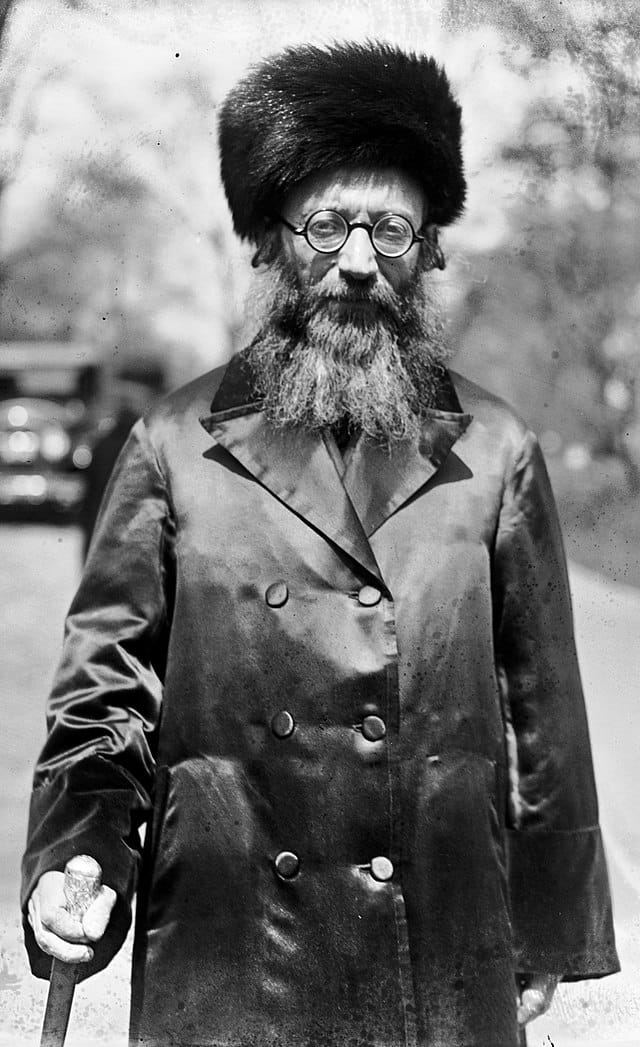
We can find similar ideas to Fayyumi in the thought of Rabbi Abraham Isaac Kook. He also raises the possibility that prophecy is the foundation of other religions. In his book, For the Perplexed of the Generation, Rabbi Kook writes:
In general, the essence of faith does not contain any opposition to other religions. As we have said already, it is possible that the abundance of knowledge and prophecy or divine spirit or other divine assistance will influence nations according to their situation and value, through the good and righteous among them. [59]
Rav Kook presents a wide variety of possibilities, from “abundance of knowledge and prophecy” to “other divine assistance” that are at the foundation of the religions of the nations of the world.
Facing Problems in the Relationship
Throughout the history of Jewish-Muslim relations, there have been periods of mutual blessing and creativity, including what is referred to as the Golden Age of Jewish Muslim-relations. However, there have also been times during which, in the name of Islam and Muhammad, Jews suffered harsh religious persecution, including massacres, forced conversions, and institutionalized humiliation. For example, in Andalusia in the 1140s, Maimonides and his family were forced to flee the Almohad Caliphate, which obliterated many ancient Jewish communities, forcing the Jews to convert or be executed. [60] As a Jewish leader, Maimonides had to respond in his epistles to life and death questions from Jewish communities from Andalusia in the West to communities as far as Yemen in the East, asking whether they should suffer a martyr's death or undergo forced conversion.
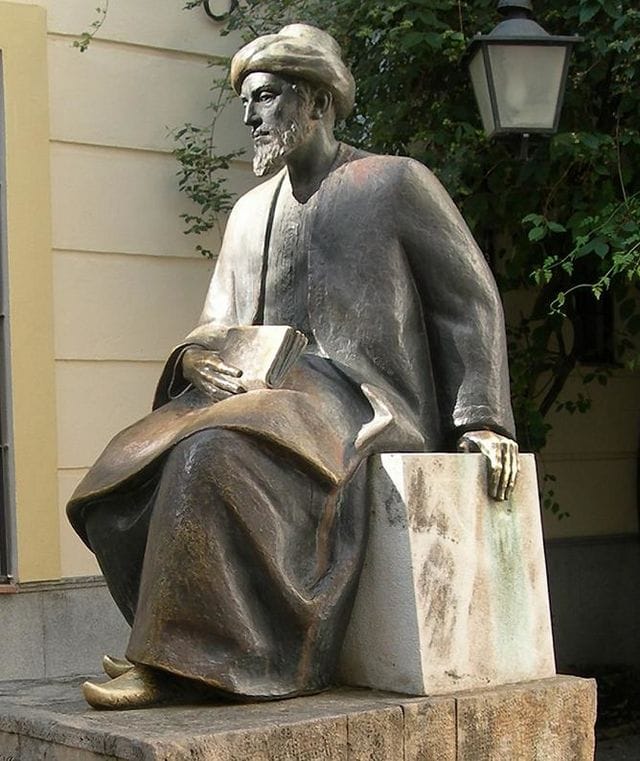
These persecutions, particularly forced conversion, are in contradiction to many Islamic sources, such as for example Surah 2.256, “There is no coercion in religion.” Yet, it is understandable that Maimonides formulated some of his expressions of pain at the persecutions and humiliations that Jews underwent in the name of Islam as a critique of Islam. [61]
It is moving that as seen above, this persecution did not prevent Maimonides from acknowledging and praising Islamic faith as an unblemished belief in the unity of God, or from seeing the hand of God in the spread of Islam throughout the world.
Our Family Connection: A Source of Both Tension and Connection
While each of our religions believes in a shared ancestry for all of humanity, for Jews and Muslims this family connection is even more intimate, with Abraham as our Patriarch, and the brothers Isaac and Ishmael as our respective ancestors. A family precludes the possibility of indifference, which can be a mixed blessing; there is potential for sibling rivalry but also for fraternity and love. It is our responsibility to God, to our Patriarch, and to one another to ensure that we propagate the latter.
Both Jewish and Islamic traditions tell the story of the great faith and devotion of Abraham in his willingness to sacrifice his son in submission to the will of God. Jews commemorate this event on Rosh Hashana, while Muslims commemorate this event on Eid al-Adha, the Feast of the Sacrifice.
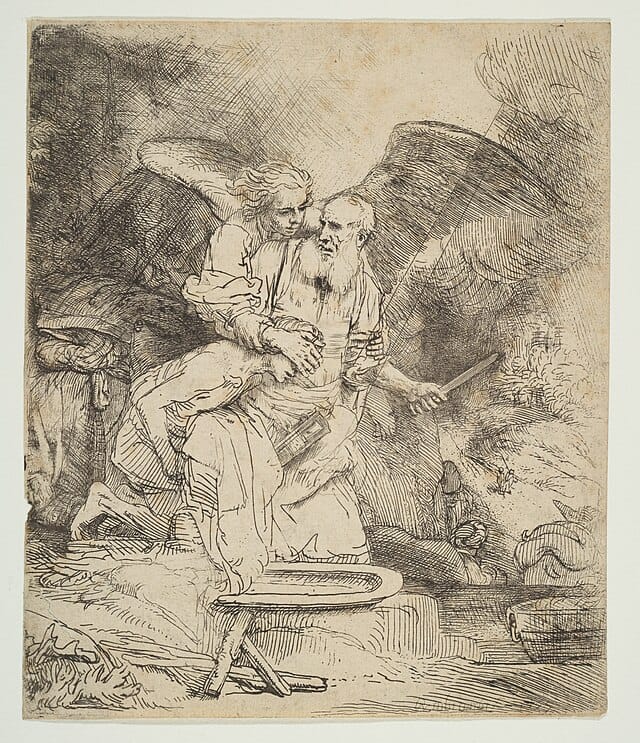
The differences between the two traditions should be studied, as they can serve as a source of connection. In the Torah, the son who is nearly sacrificed is Isaac, whereas according to most Islamic traditions the son is Ishmael. A close friend of mine, who is a Muslim Sheikh from Nazareth, was once asked who the son was in the story of the sacrifice. He replied "If it is Ishmael, it is my father. If it is Isaac, it is my uncle. Either way it is my family and family we must love and learn from."
My father-in-law, a professor of Bible, Uriel Simon, points out that in a close reading of the Torah, one can find truth in both traditions. [62] In the same section as the Binding of Isaac, the Torah tells the story of Hagar going into the desert with Ishmael. In that story too, there is mortal danger, as Hagar believes that Ishmael will die of thirst. In both stories, at the last moment an angel from God comes to say that the son is spared and will receive great blessing.[63] In other words, the Torah teaches that both sons, Isaac and Ishmael, are blessed.
The message is that Jews and Muslims must embrace all of Abraham's children. In fact, each of the five daily prayers in Islam refers to the blessing given to Abraham and his descendants (the Salat al-Ibrahimiya). Furthermore, in the Qur'an, the story of the sacrifice ends with a blessing to Isaac: “And we blessed him glad tidings of Isaac, a prophet from among the righteous. And we blessed him and Isaac.”[64]
Professor Simon points out that in the book of Genesis, during each of the three great struggles between brothers who are children of Abraham: Isaac and Ishmael, Jacob and Esau, and Joseph and his brothers, the Bible ends with a moving image of reconciliation. In each story, the brothers unite peacefully to bury their father in Hebron, in the Cave of the Patriarchs. The message that emerges is that sibling rivalry is natural, and that in the end, despite the conflicts along the way, the family relationship will be a source of connection. [65]
In a letter penned in 1908, Rabbi Kook acknowledged the problems in contemporary inter-religious relations, but expressed the aspiration for a future in which “the fraternal love between Esau and Jacob, between Isaac and Ishmael, transcends all of those troubles.” [66]
Afterword
As part of our sacred mission to bring the words of God into the world, the Jewish people are called not only to cherish our own revelation, but also to recognize the diverse paths through which the Divine voice is heard. Judaism’s engagement with Islam—rooted in shared values, reverence for God, and ethical monotheism—offers a profound opportunity to tell our sacred story in a way that unites rather than divides. Embracing this perspective opens new possibilities for understanding, cooperation, and mutual blessing. It also challenges us to become active participants in continuing the sacred story—one that leads us all toward greater wholeness and, ultimately, the redemption of the world.
[1] Mishna Sanhedrin 4:5.
[2] Mishna Avot 3:14.
[3] Genesis 12:3.
[4] See Genesis 26:4 and Genesis 28:14.
[5] Genesis 18:18–19.
[6] I believe that the connection of the human and divine is an essential message of the Abrahamic tradition. In the first lines of his book For the Perplexed of the Generation, Rabbi Abraham Isaac Kook declares: “That humanity was created in the image of God is the foundation of the Torah.” An ancient work of Kabbalah, the Bahir (passage 6) roots this concept in the very name of Abraham, noting that the numerical value of the Hebrew name Abraham (248) is identical to that of the Hebrew term ‘in God’s image’ [betzelem Elokim]. This is illustrated by the teachings of the central figure of the Talmudic law, Rabbi Akiva. He proclaimed, “Beloved is humanity who are created in the image (of God)” (Mishna Avot 3:14), and he established that the fundamental principle of the Torah is love of the other (Jerusalem Talmud, Nedarim 9:4) This message runs throughout the Abrahamic religions. For example Jesus, when asked what was the most important commandment (Mark 12:28-31), chose two biblical verses: to love God with all your heart (Deuteronomy 6:5) and to love your neighbor as yourself (Leviticus 19:18). Similarly, the Qur'an juxtaposes prayer and charity numerous times. See in particular Surah 107, al – Ma’un.
[7] Exodus 19:6.
[8] Malachi 2:7: “For the lips of a priest guard knowledge, and men seek rulings from his mouth, for he is a messenger of the Lord of Hosts.” This verse spells out the role of the priest as a source of knowledge for all.
[9] “‘You will be to Me a kingdom of priests’ …understanding and teaching all of humanity to call in the name of God, and to serve Him together, just as the Jewish people will be in the future, as it states: ‘You will be called priests of God’ (Isaiah 61:6), and as it says, ‘Torah will go forth from Zion’ (Isaiah 2:3).” (Sforno on Exodus 19:6)
[10] This idea has been developed by the philosopher Emmanuel Levinas, “ I see myself obligated with respect to the Other; consequently I am infinitely more demanding of myself than of others… There is no moral awareness that is not an awareness of this exceptional position, an awareness of being chosen.” (Difficult Freedom: Essays on Judaism, London 1990, pp. 21-22.)
[11] I Kings 8:41–43.
[12] Isaiah 2:2-4.
[13] Bava Batra 91.
[14] Zephaniah 3:9.
[15] Genesis 12:8.
[16] Zechariah 14:9
[17] Deuteronomy 6:4.
[18] Mark 12:29-30, quoting Deuteronomy 6:4-5.
[19] Rashi on Deuteronomy 6:4. It should be noted that for Rashi, this was a hope for the future, not a contemporary reality. He lived in the Rhineland during the period when Jewish communities there underwent widespread massacres and forced conversions perpetrated by the crusaders in the name of Christianity. This is an important context for understanding why, in general, Rashi had a negative view of Christianity.
[20] Rabbi Abraham Isaac Kook (1865 – 1935) in For the Perplexed of the Generation, Chapter 52. A broad analysis of Rabbi Kook’s theology of religions appears in the chapter devoted to him in Re-envisioning.
[21] Sanhedrin 13:2 (written during the second and third centuries CE).
[22] See also Sanhedrin 105a, and Maimonides’ Laws of Kings and Wars in Mishneh Torah, 8:11.
[23] Tanna Devei Eliyahu, chapter 9.
[24] See chapter on Rabbi Yehuda Ashkenazi (Manitou) in God Shall Be One: Reenvisioning Judaism's Approach to Other Religions by Nagen, Rosenblatt and Malach; Rabbi Jonathan Sacks, The Dignity of Difference: How to Avoid the Clash of Civilizations, in particular chapter 3; and Yakov Nagen, “Noaĥ: John Lennon and the Tower of Babel” in Be Become Bless: Jewish Spirituality Between East and West.
[25] Rabbi Yehuda Ashkenazi (1922–1996), known by the moniker Manitou, was born and raised in the Muslim milieu of Algiers. In adulthood, he lived in France, where he was a leading rabbinic figure among French Jewry.
[26] Sod Midrash HaToledot, vol. 1, p. 46. English translation in God Shall Be One.
[27] See Yakov Nagen, “Noahide Laws: Civilization’s Foundation or Religious Identity?” https://traditiononline.org/noahide-laws-civilizations-foundation-or-religious-identity/
[28] Sanhedrin 56a. Two of these mitzvot (idol worship and blasphemy) prevent damage to the relationship between man and God; two (forbidden relations and murder) prohibit the perpetration of grievous harm within human society; two (theft and establishing courts of justice) protect personal property, and by extension the fragile cooperation underlying human economies; and the last one (eating from a live animal) outlaws cruelty against our fellow creatures.
[29] An important rabbinic scholar in Galicia, whose most popular work is the introduction to rabbinic literature known as Mevo HaTalmud.
[30] Kuntres Tiferet Yisrael, quoted in Kol Sifrei Maharatz Ḥayyot, vol. 1 (Jerusalem: Divrei Ḥakhamim, 1958), 489–490. .
[31] This has been explicitly stated throughout the ages by many rabbinical sages, most famously by the Meiri (Rabbi Menahem ben Shlomo Meiri 1249–1315), who applied this idea to the religions of which he was aware, Christianity and Islam. This perspective is the major theme of God Shall be One, which refers to many sources and contains many arguments to validate this approach.
[32] Malachi 1:11.
[33] Talmud Menacḥot, 110a.
[34] Teshuvot Ha-Rambam, Blau edition, 448.
[35] Rabbi Yosef's daughter Adina Bar Shalom is the source of this story.
[36] Qur'an, 4.125 and Isaiah, 41:8.
[37] 2.124.
[38] 2.130.
[39] Josephus Flavius, Antiquities 1:214.
[40] See also: Qur'an 17:104, "And We said thereafter unto the Children of Israel, 'Dwell in the land. And when the promise of the Hereafter comes to pass, We shall bring you as a mixed assembly.'”
[41] See podcast series I did with Sheik Ghassan Manasra about the Five Pillars of Islam and their Jewish counterparts. https://podcasts.apple.com/il/podcast/%D7%94%D7%A4%D7%95%D7%93%D7%A7%D7%90%D7%A1%D7%98-%D7%94%D7%91%D7%99%D7%9F-%D7%93%D7%AA%D7%99-the-interfaith-podcast/id1648048879
[42] Bukhari 3207.
[43] Genesis 18:19.
[44] For a discussion of the linguistic connection between these words: https://en.wikipedia.org/wiki/Sadaqah
[45] Surah 107.
[46] In the standard blessing on Ramadan, “Ramadan Karim,” the Arabic “karim” means generosity and indeed already in the Qur'an (2.184) it is stated that if one cannot fast they can expiate by giving charity.
[47] See Professor Abdulla Galadari, Spiritual Meanings of the Haj Rituals.
[48] Isaiah 56.
[49] Isaiah 19:19.
[50] Midrash Bereishit Rabba 39; Maimonides, Mishneh Torah, Laws of Idolatry 1:1-3.
See also: Mishneh Torah Laws of Shmitta 13:13: “Any one of the inhabitants of the world whose spirit generously motivates him and he understands with his wisdom to set himself aside and stand before God to serve Him and minister to Him and to know God, proceeding justly as God made him, removing from his neck the yoke of the many reckonings which people seek, he is sanctified as holy of holies. God will be His portion and heritage forever and will provide what is sufficient for him in this world.”
For another expression of religious authority and value not dependent on revelation, see the famous statement in the Talmud, “the sage is greater than the prophet” (Talmud Baba Batra 12a).
Rabbi Abraham Isaac Kook (Orot, page 120) pointed out that there prophets whose calls to the people to repent were not heeded; whereas there were sages who managed to bring about changes through their teaching.
[51] Qur'an 6:75-78.
[52] In God Shall Be One, in the chapter “Religiosity as an Innate Quest for God,” I argue that the core belief in Judaism of a partnership between the human and the divine leads to seeing value in the expression of the innate human drive to search out and touch the divine; religious gestures sprout from below instead of being delivered from above.
[53] Teshuvot Ha-Rambam, 448.
[54] Mishneh Torah, Law of Kings 11:9
[55] Emden, Lehem Shamayim al Avot 4:11.
[56] Avot 4:11.
[57] In Maimonides’ Letter to Yemen, which was addressed to the son of Fayyumi, Maimonides calls Fayyumi “our teacher and rabbi.” According to Rabbi Kapah, Fayyumi’s book Garden of the Intellects influenced Maimonides' Guide for the Perplexed.
[58] He notes the spiritual symbolism in the Shahada. In Arabic “There is no God but Allah” is composed of 4 words broken into 7 syllables and 12 letters with 4,7,12 numbers having cosmic significance in Fayyumi’s philosophy (Gan HaSekhalim, Chapter 2, pp. 43–44(.
[59] Rabbi Abraham Kook, For the Perplexed of the Generation, chapter 52.
[60] See David Wasserstein, "The intellectual genealogy of Almohad policy towards Christians and Jews” and Alan Verskin “Medieval Jewish perspectives on Almohad persecutions: Memory, repression and impact”, both in Forced Conversion in Christianity, Judaism and Islam, ed. Mercedes Garcia-Arenal and Yonatan Glazer-Eytan, Brill 2020.
[61] See for example in Maimonides, Epistle to Yemen.
[62] Seek Peace and Pursue It [Hebrew] (Tel Aviv: Yediot Books, 2002) 56-59.
[63] Genesis 21.
[64] Qur'an 37.112-113.
[65] Simon quoted in Be Become Bless: Jewish Spirituality between East and West, 81. That sibling relations transcend intra-Jewish relations also appears in the Bible. See for example: “You shall not abhor an Edomite, for such is your brother” Deuteronomy 23:8.
[66] Iggerot HaRe’iya 1:112.
